Memories of Indonesia

Here’s an excerpt from At the Table, Nourishing Conversation and Food. It’s from a chapter entitled “On the Road to Social Justice,” depicting Indonesia as it was in the 1970s:

img003

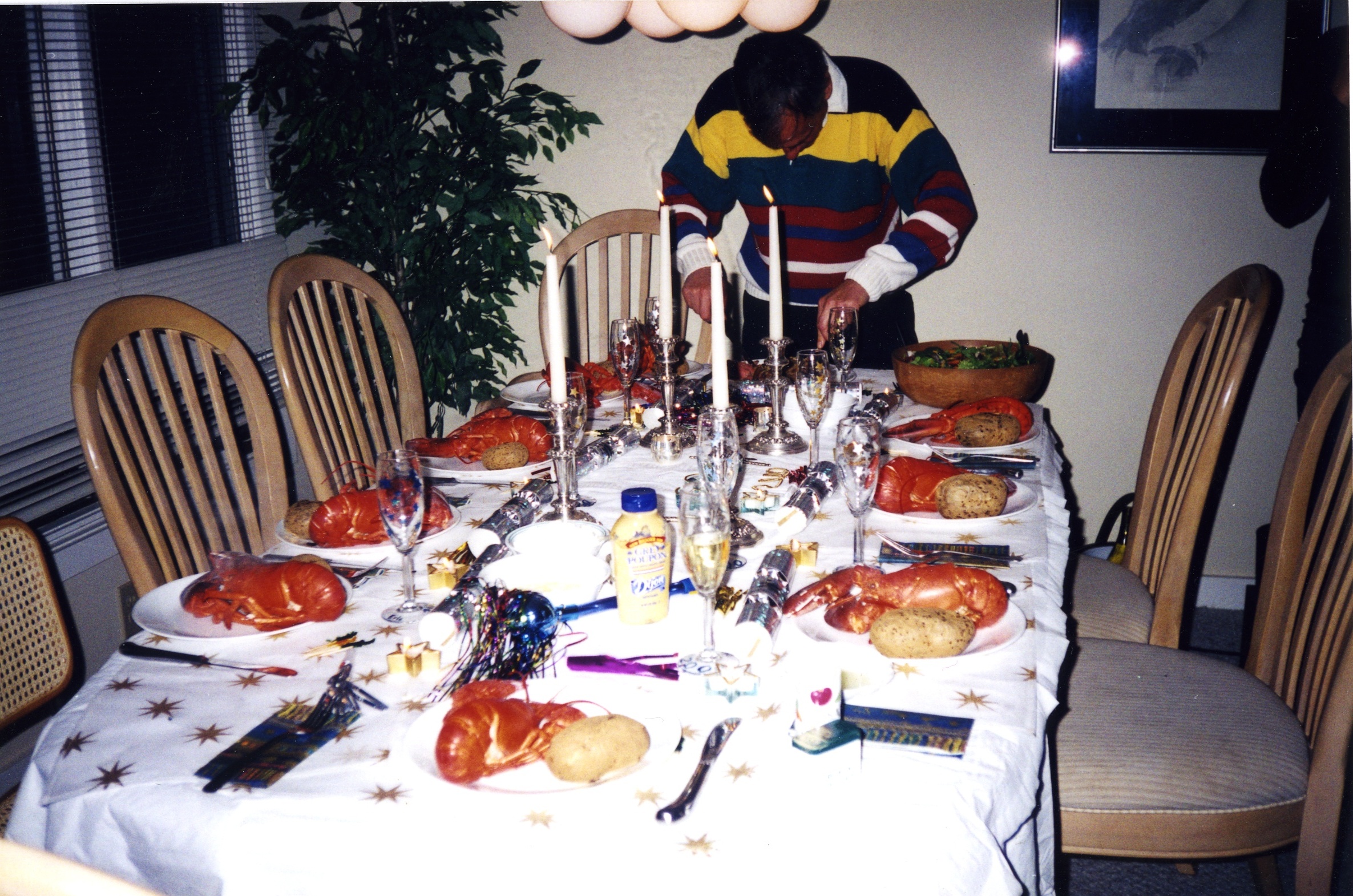
In Jakarta, we live in an old Dutch colonial home with a large walled garden and a grand old mango tree that provides both abundant shade and fruit. From our bedroom window we can see cracked, weed-infested culverts that have never been installed lying in an overgown field at the end of our street–the homes of desperate Indonesians who have come to the city looking in vain for work. Our gardener, who doubles as a watchman, sits beside our high locked gates every night on the alert for intruders and beggars who might slip through our protective perimeter. We find it an uncomfortable experience living inside these walls, attended to by the six servants who come with the house…I never come to like our table in Jakarta. It is too large and the atmosphere too formal, with the house boy serving us, the ayah helping to feed Tim, and the cook popping his head in periodically to check with Dot that the cheese souffle stuffed with shrimp is all right. At first, it is apparently the only dish he is comfortable preparing, and far too often it lands on our dinner table with a depressing thud.

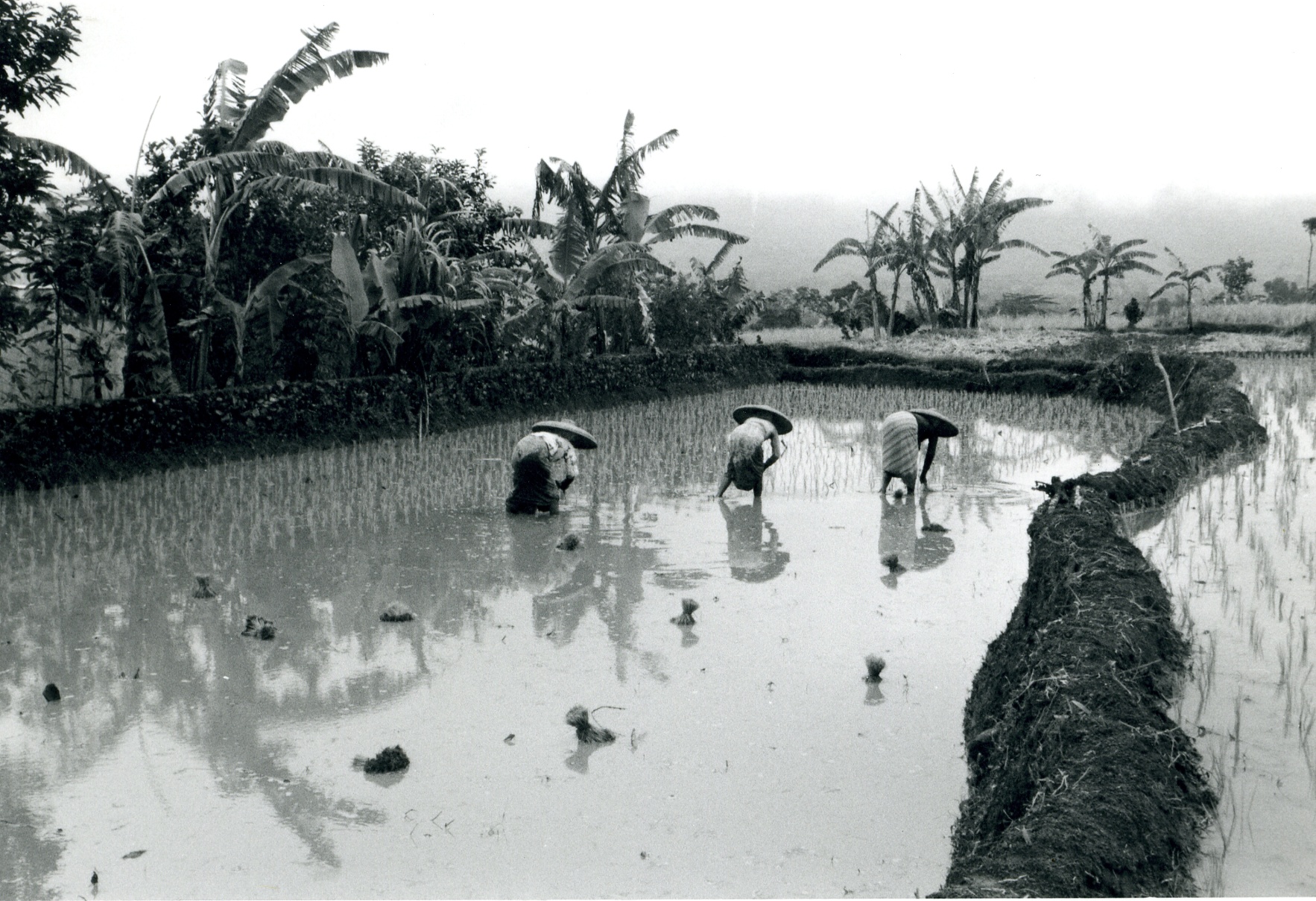
I much prefer our simple little dinner table at our bungalow in the Puntjak, the hills that are an hour’s drive from the capital in the direction of Bandung. Whenever we can, we go there on weekends to escape Jakarta’s oppressive heat and get a little exercise walking around rice paddies and tea plantations…Beside our bungalow in the Puntjak is a clay tennis court where…young boys magically and swiftly appear whenever we walk over for a game of doubles. And immediately below the tennis court, the rice paddies start. At planting time, water buffalo pull simple hand-held ploughs through the muddy plots just as they were doing when Dr. Gunawan Nugroho took me through his village to introduce me to the concept of community development…

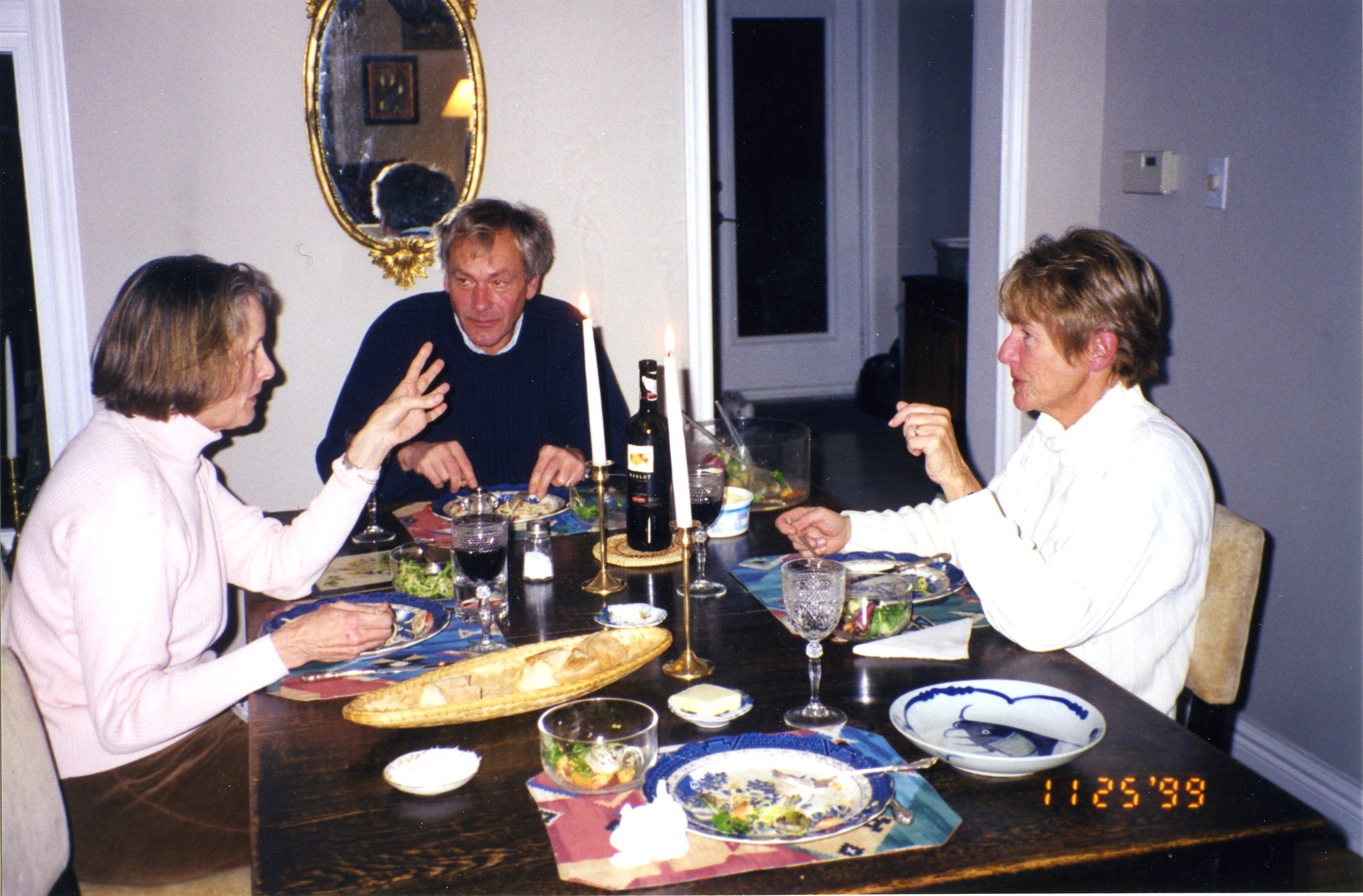
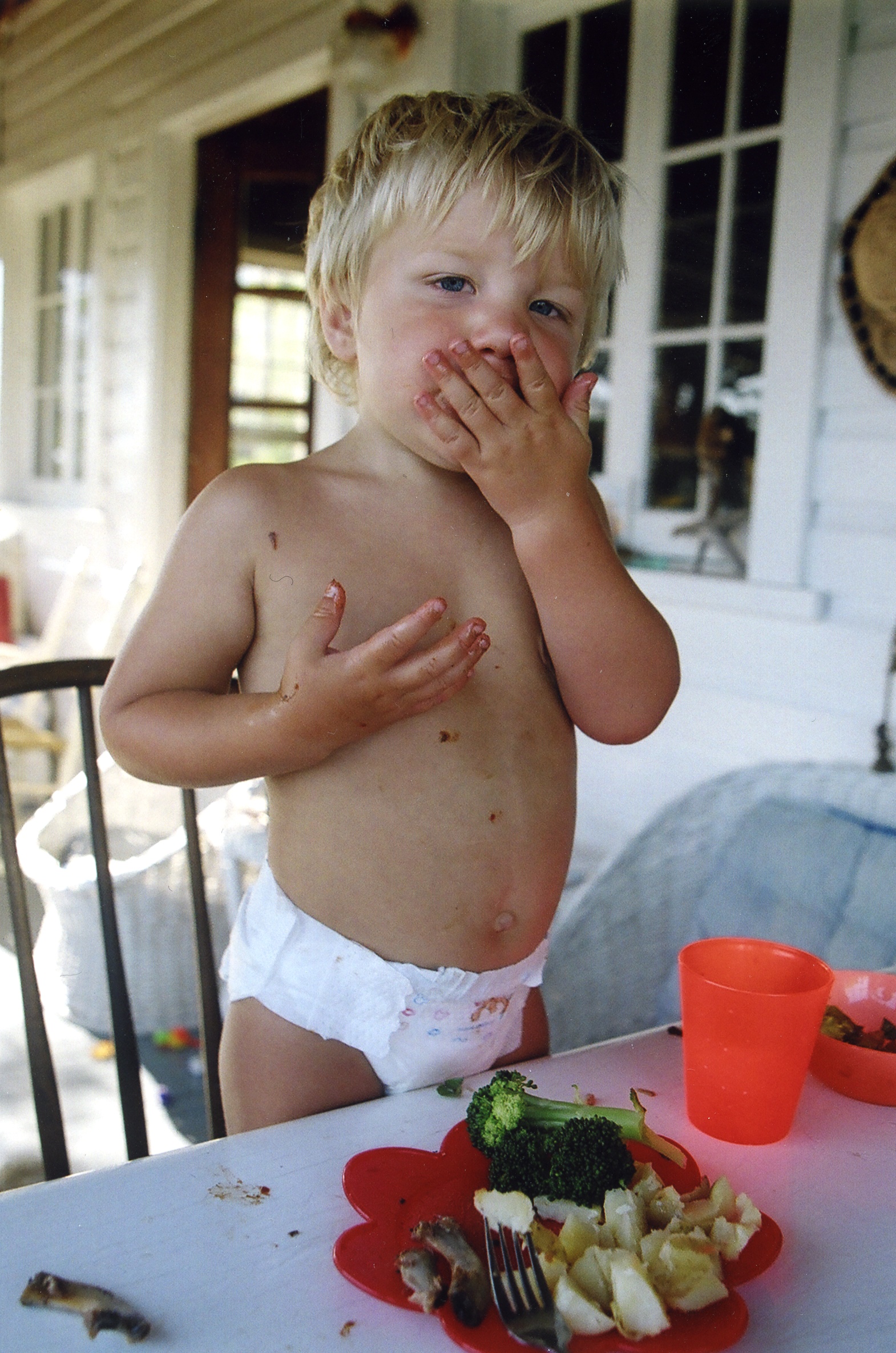
Rather than using the embassy bungalow, which comes with a servant, we rent this one with an American/Austrian couple, Sara and Sepp, who have become lifelong friends. Our meals are simple and casual, our conversation loud and happy, and after dinner Sepp will get out his guitar and sing Austrian lullabies to the kids as they fall asleep, and we enjoy another glass of good Austrian wine. Of the five children at our bungalow, only Karen is old enough to participate fully in our dinner conversation, yet we sense how much all of the kids enjoy the hum and the laughter around them, and how it is helping them develop a feeling for the magic of the dinner table.

For more about the importance of mealtime conversation and to read entertaining tales from tables set in different locales over four generations, order a copy of At the Table by going to http://www.penumbrapress.com.

Posted in biography, books, child development, contemporary culture, family, family literature, food literature, recipes, travel books | Tagged , , , , , | Leave a comment

At the Table in the Summer

img009

What tastes more of summer than homemade blueberry muffins? If you’d like to have this classic recipe and also read some entertaining stories, many of them set in cottage country, why not visit the Creemore Farmers Market on Saturday morning, July 13? T.A. Keenleyside will be signing copies of his entertaining book, At the Table, Nourishing Conversation and Food, recently published by Penumbra Press. It includes the best recipe ever for blueberry muffins and many others that you can enjoy at any time of the year. Complimentary shortbread cookies, made from another recipe in the book, will be available to those visiting the stand of Curiosity House Books, hosts of this event.

Can’t make it to Creemore on July 13? You can buy the book by going to http.//www.penumbrapress.com/book.php?id=360.

Libraries and retailers, please contact: john@penumbrapress.ca.

See you at the Creemore Farmers Market

Station on the Green,
Caroline St. East,
Creemore,
Ontario.

Curiosity House Books,
178 Mill St.,
Creemore,
Ontario.

Posted in books, child development, contemporary culture, family, family literature, food, recipes | Tagged , , , , , | Leave a comment

Mahatma Gandhi and the Pop-Tart Incident

Here is an excerpt from At the Table, Nourishing Conversation and Food on the subject of differing approaches to parenting:

At left, Sharron Dalton

At left, Sharron Dalton

Sharron Dalton is probably the greatest cook I know. She can turn the dwindling resources of the sparsest refrigerator into a creative feast. For long a nutritionist at New York University with a special interest in obesity, she’s sensitive to the dietary needs of her family and friends. She’s sensible, she’s creative, she’s fast, and as she works she drops pearls of epicurean wisdom as quickly and excitedly as she talks….

Her husband….Den’s a political philospher with the receding hairline and furrowed brow of the anguished thinker….Philosophers tend to have eclectic minds and interests, so conversation before and after dinner ranges widely. That is especially so with Denny, for every observation on every subject has relevance to his search for truth. But one needs to be wary with this master of the Socratic method lest a whole evening pass while you talk and he listens, leading you gently to an understanding of the weakness in your argument–your philosophy of life–but in such a way that you are left thinking the discovery was your own. This is the art of the great teacher. And Denny was my guru.

What a wonderful combination for any evening: great food and great conversation! But with Sharron and Denny such swamis of the kitchen and the classroom, how could it come to pass that there would be such a thing as “Pop-Tarts” in their wholesome larder? How could they have assumed such importance in the lives of our respective families that in our unending conversational pursuit of understanding they are spoken of with the weight and reverence normally preserved for such momentous subjects as Gandhi’s Salt March of 1930 or the Calcutta fast of 1947?….

The Pop-Tart Incident, as we refer to it, was a consequence of Den’s putting into everyday practice the notion of swaraj in the personal sense of obtaining freedom by gaining self-knowledge. “It is swaraj when we learn to rule ourselves,” Gandhi wrote, and this became a fundamental principle in the Dalton’s approach to child-rearing….Den and Sharron were there always to pose and answer questions, and in that way to assist their children in their voyages of self-discovery as they searched inwardly for personal swaraj. But values were not imposed, and resistance to the normative preferences of their parents was tolerated. A final, important dimension of this approach to parenting was a rejection of the popular tool of discipline, for the only acceptable tyrant was one’s own conscience, the “still small voice” within.

Interested in reading the whole, entertaining story, then why not purchase a copy of At the Table, Nourishing Conversation and Food? It is full of humour and food for thought. Just go to: http://www.penumbrapress.com/book.php?id=360.

Posted in biography, books, child development, contemporary culture, family, family literature, food | Tagged , , , , | Leave a comment

Setting the Table

img007

Here are two events you might want to attend to learn more about At the Table, Nourishing Conversation and Food:

1.) “Turn Off Your Cell Phones. It’s Dinnertime!”
Beaches Speakers’ Series,
Juice and Java Cafe,
2102 Queen St. East (at Wineva Ave.)
Thursday, April 18, 7.30 p.m.

A discussion of the importance of meals shared around the dinner table, followed by brief,
entertaining readings from At the Table.

2.) Book Signing,
Indigo Books and Music,
Eaton Centre,
Friday, April 19,
2.00-5.30 p.m.

At both events, we will be serving complimentary shortbread cookies, made from two recipes in At the Table.

Looking forward to seeing you. Can’t make either event? You can always buy the book by going to: http://www.penumbrapress.com/book.php?id=360.

Posted in biography, books, child development, contemporary culture, family literature, food, recipes | Tagged , | 1 Comment

Table Talk With Kids

Here’s an excerpt from At the Table, Nourishing Conversation and Food (Penumbra Press, 2012) on the subject of conversing with children at dinnertime:

Sam "In happier times"

Sam “In happier times”

“Isto e chato,” Sam, seven, a demanding eater, complains–“This sucks” in Portuguese. It’s a phrase I taught him at March break, sitting at our glass-top dinner table in a villa we had rented in a remote corner of the Algarve. Teaching the boys rude expressions was, I figured, a good way to interest them in memorizing some basic Portuguese as well as keeping them happily engaged at the table. I was aware, too, of the study done at Harvard that disclosed that dinner with the family is more important in developing vocabulary in young kids than play, story time, and other family activities.

“Just try the salad, Sam,” Deb says. “You might actually like it.”

His lips curl like wood shavings and his chin droops onto his chest, the blond fringe of his hair touching his plate. “I hate salad.”

So now the conversation turns to other dinner tables that have been ours for several weeks on extended visits with friends, renting, or house-exchanging: one belonging to Sepp, our Austrian friend, in Damascus, where, the night we were preparing to leave on a trip to Jordan and Wadi Rum, I startled the servants by charging into the dining-room dressed as Lawrence of Arabia and waving a jewelled scabbard as I cried, “To Aqaba!”….

“Isto e chato,” an obstinate Sam says again. “Is there anything else to eat?”

“You haven’t even tried the salad yet,” says Deb. “What’s the matter? You ate all sorts of new things in Portugal.”

“Yeah, well, this isn’t Portugal, is it?”

Tad chuckles at his son’s determined nature. “Remember the time at the cottage when Rod was putting in the new sink in the kitchen? I told Sam he couldn’t have eggs for breakfast because we all had to stay out of the kitchen, but that he could have them for lunch instead. ‘Okay,’ Sam said, ‘then I’ll have my lunch now!'”

“Where else would you learn such repartee if not around the table?” I say with a laugh. “You know an A.C. Nielsen poll disclosed that the average parent spends only thirty-eight and a half minutes per week in meaningful conversation with their children. No wonder, when apparently less than a third of kids sit down to eat dinner with both parents on any given night.”

(“Back Home,” in At the Table Nourishing Conversation and Food. Available from Penumbra Press: www.penumbrapress.com/book.php?id=360)

Posted in biography, books, child development, contemporary culture, family, family literature, food | Tagged , , , | Leave a comment

Worried about your child’s progress in school or vulnerability to risky behaviour like smoking drugs and over eating?

Front COVER At the Table 3[1]Interested in the connection between these issues and parents regularly eating meals with their children? Then come and hear a discussion of At the Table, Nourishing Conversation and Food at the Downsview branch of the Toronto Public Library, 2793 Keele Street, Toronto on Thursday, January 31 at 1.00 p.m. 

Rather than doom and gloom, however, the book is really a celebration of family and friends gathering around the dinner table for good food and conversation. So most of the talk will focus on entertaining tales shared at dinnertime, with only a smattering of alarming statistics to remind one of the importance of mealtime conversation.

Can’t make it to the talk? You can buy the book ($21.95) by contacting Penumbra Press at: www.penumbrapress.com.

004Looking forward to seeing you at the Downsview branch on Thursday, January 31 at 1.00 p.m. Meanwhile, bon appetit et bon conversation!

Tagged , , , | Leave a comment

Worried about having put on weight over the holidays?

We should probably be even more concerned about the weight our children have put on over the same period. In 2007 a UNICEF study reported that Canadian children ranked second worst among developed countries in terms of obesity.

Front COVER At the Table 3[1]

If you’re interested in the connection between this problem and the declining frequency with which our children share meals and conversation with their parents, then come and hear a discussion of At the Table: Nourishing Conversation and Food at the Deer Park branch of the Toronto Public Library, 40 St. Clair Ave. E., Tuesday, January 15, 2012 2.00 p.m.-3.30 p.m.

Rather than doom and gloom, however, the book is really a celebration of family and friends gathering around the dinner table for good food and conversation. So, in a similar vein, most of the talk will focus on entertaining tales shared at dinnertime, with only a smattering of alarming statistics.

045

Can’t make it to the talk? You can always buy the book by contacting Penumbra Press: www.penumbrapress.com.

Tagged , , , | Leave a comment

Turn Off Your Cell Phones. It’s Dinnertime!

Front COVER At the Table 3[1]Do we have as many meals around the dining room table as we used to–together as families and friends, enjoying good company and conversation as well as good food? Most observers of contemporary culture tell us “no”, not in today’s frenetic urban societies where everyone’s burners are habitually locked on high. Yet, research shows that table talk is important for childhood educational development and a social and psychological anchor for all who join in the experience. For those reasons, we should be concerned that a study released by UNICEF, incorporating data from the Organization of Economic Cooperation and Development, revealed that Canadian children rank near the bottom relative to those in other developed countries when it comes to frequently eating their main meal of the day with their parents and also regularly talking with them. As a result they are at higher risk of becoming obese, and of engaging in such high risk behaviour as drug and alcohol abuse.

At the Table, Nourishing Conversation and Food is a celebration of families and friends, eating and talking around the table, and subtly reveals at the same time the benefits of doing so. From a comical brush with the KGB to the capers of an eccentric climber in the Himalayas, it is a collection of unusual, entertaining and informative tales shared at tables in many locales. It also includes family recipes that are relatively simple to prepare, usually healthy, and always tasty.

When you finish this book, you’ll want to get out your neglected bottle of lemon oil, give your thirsty old table a rub, and then call everyone to dinner.

To order this book, please go to: www.penumbrapress.com/book.php?id=360

Posted in biography, child development, contemporary culture, family literature | Tagged , , , , , | Leave a comment

More Miracles

Italy is clearly the best country in which to go looking for miracles; it’s teeming with them. But you can find them in lots of other places, too. Of course, miracles don’t necessarily lead to sainthood, not by any means. Attaining sainthood is not easily accomplished and involves an arduous process with pitfalls along the way. Here’s a quick synopsis of what’s involved:

A bishop investigates your life and writings, looking for evidence of extraordinary virtue. If found, this information is communicated to the Vatican. Then a panel of theologians and the cardinals of the Congregation for Cause of Saints evaluates the details submitted. If it deems you worthy, it makes a recommendation to the pope who may then proclaim you venerable, i.e. a model of Catholic virtues.

Now comes the really tricky part. To become “beatified” and known as “blessed”, you have to be attributed with a posthumous miracle. You can get around this hurdle if you are a martyr who died for the faith, since in such instances you can be beatified without evidence of a miracle. But with just one you’re still not there. To be eligible for sainthood, there must be evidence of a second miracle, and it, too, must be posthumous!

But all this uncertainty about miracles leading to sainthood certainly shouldn’t stand in the way of your enjoying them wherever you encounter them in your travels.

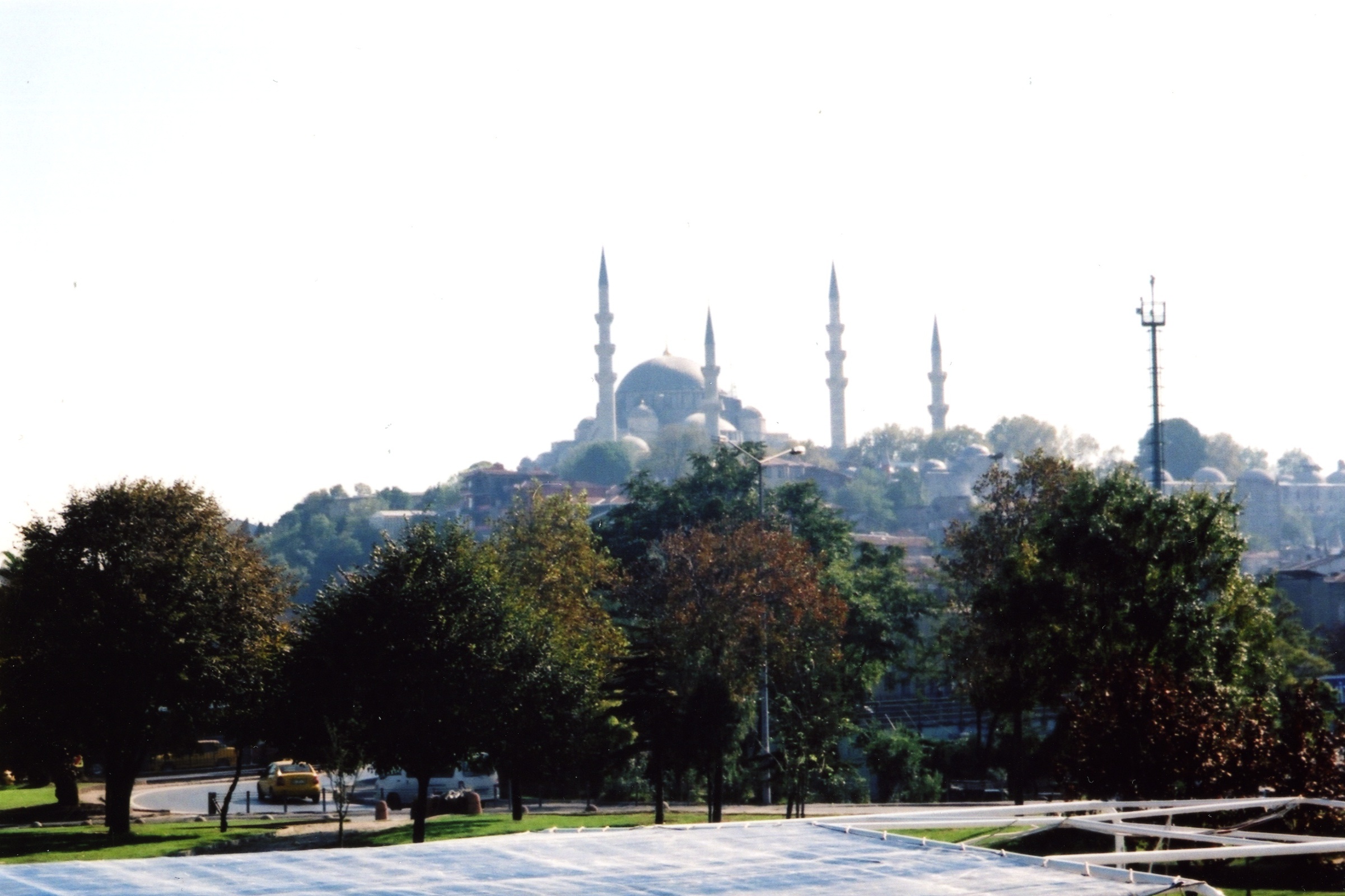
On a recent trip to Turkey we came upon three that we found quite intriguing. The first was in the Aya Sofya in Istanbul. Completed in A.D. 537, it was the world’s largest and most important Christian monument until the construction of St. Peter’s in Rome in the seventeenth century. In 1453, with the city’s conquest by Mehmet II, it was converted to a mosque and then, in 1936 when Kemal Ataturk turned Turkey into a secular republic, it was preserved simply as a museum. In the north aisle as you enter through the main door, there is a marble and brass column that was blessed by St. Gregory, the Miracle Worker. It is known as “the weeping column,” for water oozes from it–water that can work miracles. So many believers have pawed the column over the centuries, hoping that their hands will become moist, that they have worn a hole in the column. If you place your thumb in this hole and turn your hand 360 degrees, you will be cured of any specified ailments, but only if your finger emerges damp. We gave it a go. No luck. But then we weren’t suffering from any particular ailments either!

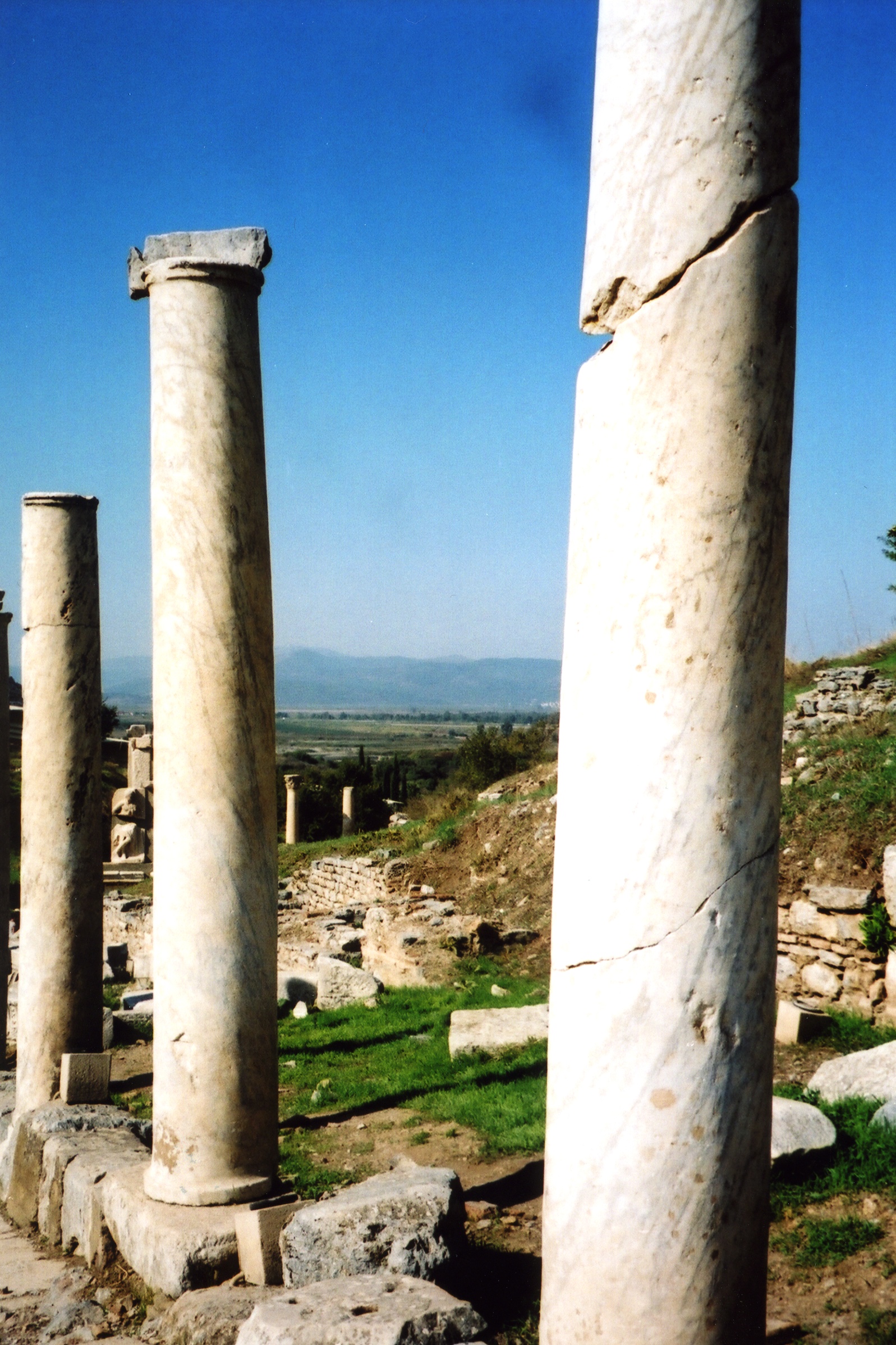
Later, after visiting the glorious Roman ruins of Ephesus, we walked to the Cave of the Seven Sleepers in the hills outside the town of Selcuk. It was here, during the persecution of the Roman emperor, Decius, in the second century A.D., that seven young Christian men were sealed into a cave and left to die. It was some 200 years later that a farmer happened to open the cave and found the men alive, but, of course, now very old and fast asleep. After he awakened them, they set off for Ephesus where they shocked the townsfolk with their ancient clothing and the old coins with which they attempted to buy some food.

I climbed onto a shelf, maybe five feet long, that was cut into the rocks and stretched out as best I could. Was this the bed of one of the seven sleepers? I don’t know. But I didn’t lie there long. I was afraid of nodding off!

Late that afternoon, I persuaded Dot that we should make yet another expedition in search of miracles: to the House of the Virgin Mary. So we hired a taxi that took us seven kilometres up a winding mountain road to a modest stone building where Mary reputedly spent her last days. She is supposed to have travelled to Ephesus with St. John who is himself apparently buried in Selcuk beneath the ruins of the basilica built in his name. Ultimately, she repaired to this house high in the hills above Selcuk. How do we know? Well, in the nineteenth century a bedridden German nun had a vision that revealed to her every detail of Mary’s house, including its exact location. And that is apparently where the simple edifice was subsequently uncovered.

 It was late in the afternoon when we arrived at the shrine so the busloads of pilgrims and tourists had all left, and only a handful of people were walking along a manicured pathway in a park-like setting to the house. Just below it, we spotted a long, stone wall plastered with pieces of white cloth to which pilgrims had attached devotional messages to the Virgin Mary. Their numbers were a testament to the hordes of people who come to this hallowed place of pilgrimage.

Hmmm, we think. It was a long uphill trek from Ephesus for a frail, eldery lady. But three popes, including the current one, have visited the shrine, so surely the house is authentic. Back home, a friend who is an Anglican theologian, specializing in early Christian history, assures me there’s no way that Mary and St. John were in Ephesus together and that the house is Mary’s last resting place. He cites a number of facts to repudiate the claim.

Me, I rather like the story, especially the bit about the bedridden nun whose vision miraculously led to the uncovering of Mary’s house. Why spoil it all with reasoned academic argument? Travelling to the sites of miracles is fun. It’s a way to see the world through different eyes–with eyebrows lifted perhaps, just a touch!

Posted in books, travel books | Tagged , , , , | Leave a comment

Looking for Miracles

It was a number of years ago in Padua, Italy that I first became interested in religious miracles, though not as a means of healing my own or anyone else’s ailments, physical or mental.  Rather, my attraction stemmed from the realization that miracles were another fascinating means for travellers to connect with the cultures of other countries. Dot and I had gone to the Basilica di Sant’ Antonio, expecting to give it only a cursory look, for it is not deemed to be of particular artistic merit. But we ended up staying some time. What drew our attention were the hordes of faithful filing past the tomb of St. Anthony, and stopping to touch and kiss its polished stone. And when we looked more closely, we were amazed to discover an extraordinary array of offerings made to the saint in thanks for miracles performed. There were photographs of horrendous car crashes that devotees had survived with his blessing, pictures of lost children who were thankfully reunited with their distraught parents, and there were even the discarded syringes of drug addicts who had kicked their habits with the help of the humble friar.

At the rear of the apse in the Chapel of the Reliquaries, we found further testament to St. Anthony’s popularity as a miracle worker, for in it were housed some of his saintly remains: parts of his larynx, tongue, lower jaw, and, most amazing of all, the beard that purportedly grew after his death!

When we had had enough of this ghoulish gawking, we stepped outside and walked to one end of the adjacent Piazza del Santo. There a crowd of excited Italians was holding a toy Formula One car race, complete with loud speakers, checkered flags, hairpin curves, screaming engines, and horrific crashes. More need for St. Anthony’s intervention! 
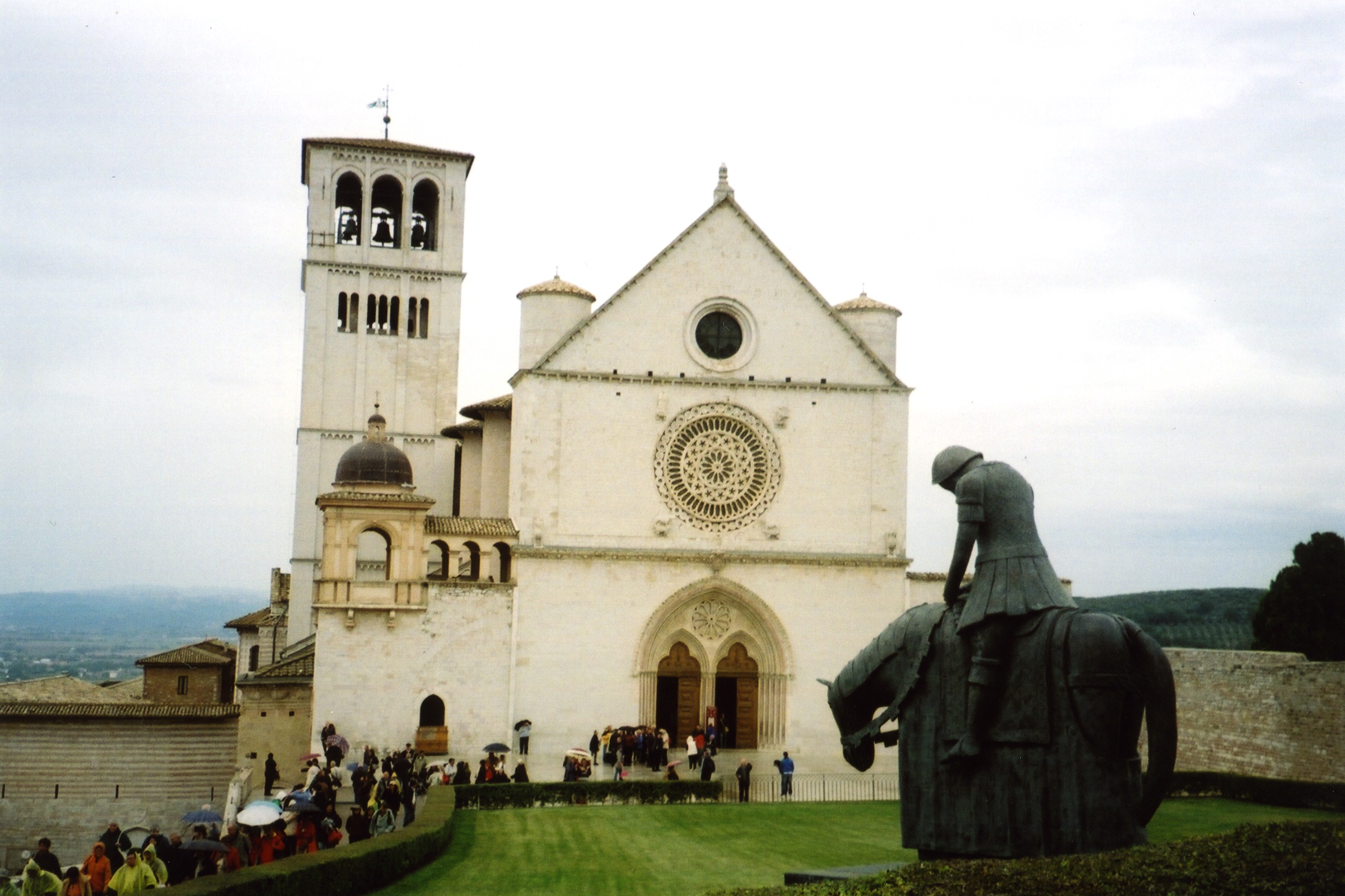
Bitten in Padua by the bug of miracle-hunting, on a recent visit to Italy, Dot and I were keen to explore the turf of St. Anthony’s contemporary, St. Francis of Assisi. We were both suffering from bad colds at the time, but, neveretheless, we decided that the best introduction to this saint would be to follow in his footsteps and walk from the town of Assisi to his hermitage in the forest on the slopes of Monte Subasio. It is a four-kilometre uphill hike along a paved road today, not a country path, but we were certain, nevertheless, that we would encounter a steady stream of pilgrims along the way, making the trek to pay homage to St. Francis. We did not. There were only three of us on foot that day–a young woman from England and ourselves, three lapsed Anglicans at best. What we did experience on the road, however, was a steady stream of cars, buses, and taxis whizzing past us, carrying friars, nuns, and humble worshippers quickly to the grotto and back to town, where, presumably,they would join the long queue in the lower church of the Basilica di San Francisco parading silently past the tomb of St.Francis.

In their rush between sacred sites, the faithful likely missed out on the sorts of miracles that were bestowed upon those of us who took a little more time travelling to and from the hermitage. Just as Dot and I headed out of Assisi, it started to rain. I had brought my waterproof jacket, but Dot had no cover at all. But at that very moment, lying on a bench at the portal of the town, we spied a discarded, pale blue umbrella. One of its spokes was broken, but it still worked, and it gave Dot protection from the rain that day as it has ever since.
Just as we reached the hermitage the rain stopped, and as we began the trek back to Assisi, the sun peeked through the gray and black clouds. And then, as we reached the edge of Assisi, I stopped suddenly and turned to Dot. “You know, I’ve stopped coughing and sneezing!”

“I have, too!” Dot shouted with surprise.

In her case, the symptoms returned shortly after we left Assisi, but for me it was, indeed, the end of the cold. Was it St. Francis who bestowed these gifts upon us–three minor miracles? Well, two and a half at least, considering the return of Dot’s cold!

Back in Assisi, we encountered another miracle maker who rather caught our fancy, Santa Chiara, or St. Clare, whose remains are entombed in the enormous church that bears her name. To put it in contemporary terms, she seems to have had the hots for St. Francis. She was more than a decade younger, but despite her parents’ objections, she ran away from home to join him, eventually founding the order of Poor Clares. She proved to be adept at using the communion wafer to ward off invaders and local thugs. But here’s the most amazing part of her story. Bedridden and near death in 1252, she was unable to attend the Christmas eve mass being celebrated in the new basilica built to honour St. Francis. But then suddenly she was blessed with a vision of the mass from her bed, even though she was several miles away. Even more amazingly, she could hear the Franciscans singing. It was, however, not until 1958 that the pope, recognizing both the audio and visual features of this miracle, named St. Clare the patron saint of television. So, now you know whom to beseech every time that damn box goes blank or the picture turns fuzzy!
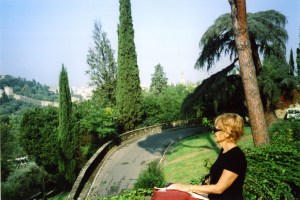
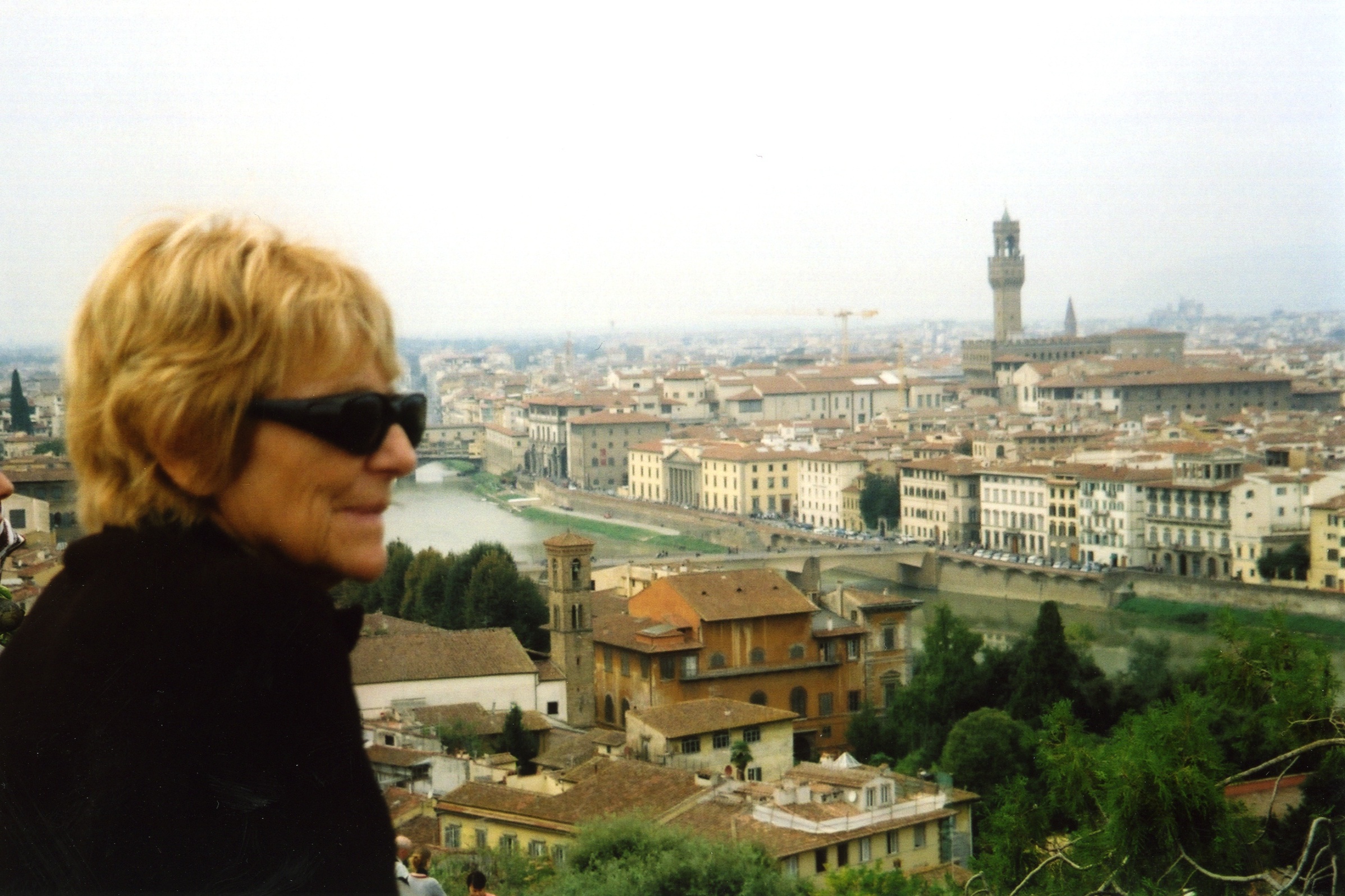
It was mid-October when we got to Florence, but the city was still so packed with tourists that we forsook the galleries for walks in the countryside. A local bus dropped us in the centre of the enchanting town of Fiesole, the site for the period film, A Room With A View. From there we walked back to Florence past luxurious, shuttered villas, olive groves and vineyards; in the film they cheated and took carriages between Fiesole and Florence.
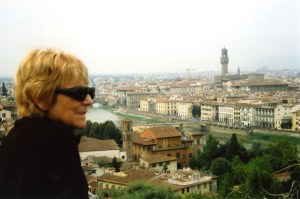
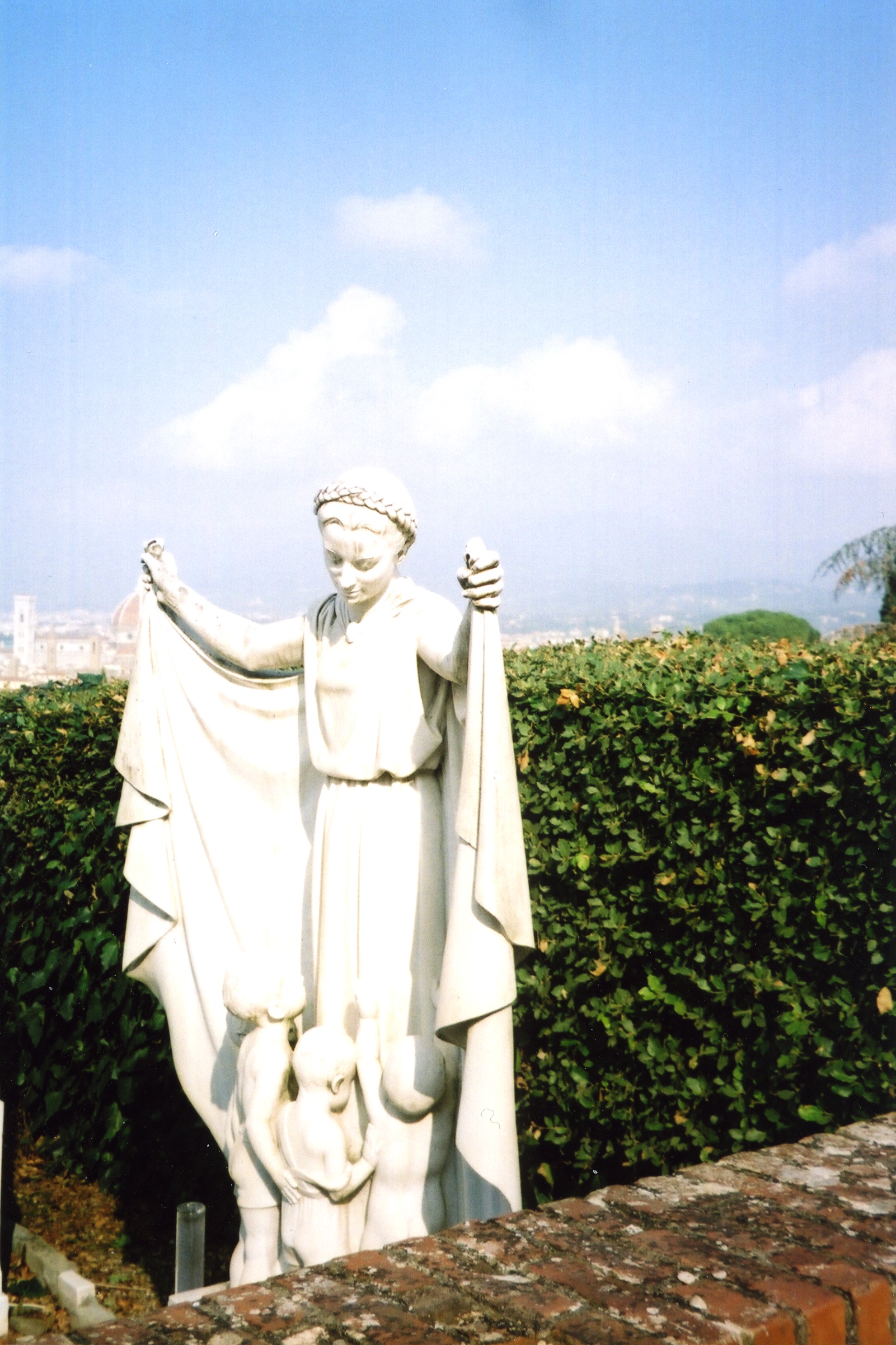
Another day, we crossed the Arno and climbed into the hills above the river, eventually reaching the Piazzale Michelangelo with its panoramic views of Florence in the valley below. And then higher up we came to San Miniato al Monte, its white and green facade glistening in bright sunshine. The story goes that San Miniato, an eastern Christian living in Florence, was decapitated during the persecutions of Emperior Decius in A.D. 250. Yet, he managed to pick up his head, tuck it under his arm, and walk across the river. Then he climbed the hillside until he reached the spot where the church stands today. There, he at last lay down and died. He, and then other Christians were buried there, and a shrine in his memory was built in the fourth century.

Hmmm, we contemplate. At a leisurely stroll the walk took us an hour, maybe an hour and a half. Of course, San Miniato’s circumstances were different. He would have been in a bit of a hurry!

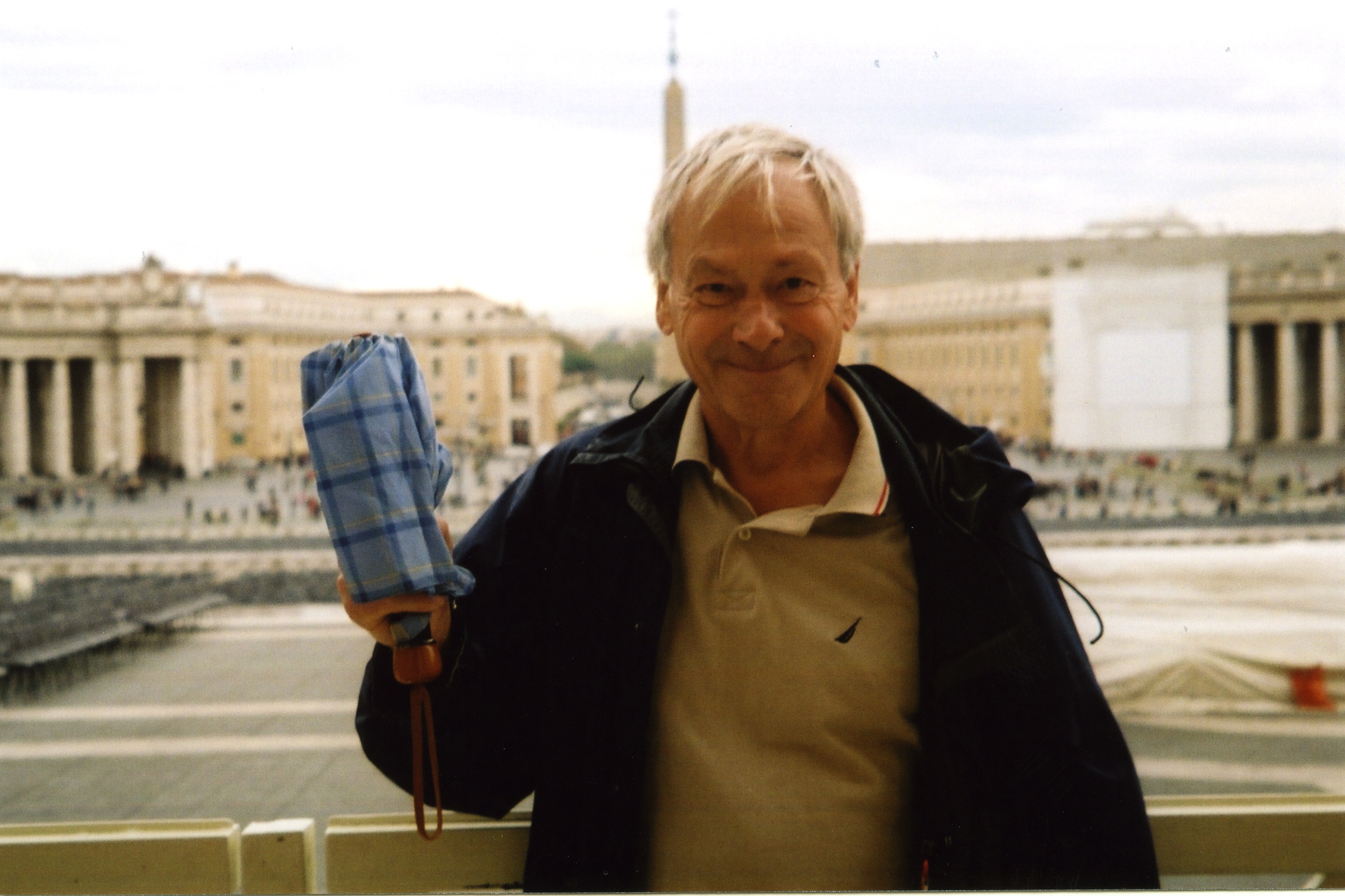
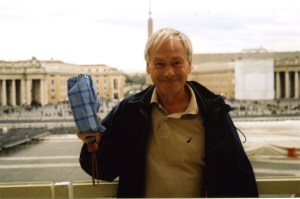
Rome was our last destination for miracles on this particular trip, and the chosen site for encountering them, the Vatican where the day before six church celebrities had been canonized by Pope Benedict. Chairs were still set up in St. Peter’s Square and a sizeable crowd, dotted with priests and nuns, was milling about. Large banners with images of the six new saints hung from the facade of the basilica. One of them was of our own Brother Andre Besette who, as the Globe and Mail put it, has piled up “Gretzky-like statistics” in the miracles department. Before and since his death in 1937 at the age of 91, he has had attributed to him by the faithful more than 125,000 miracles. He was a simple doorman at St. Joseph’s Oratory in Montreal responsible for distributing to pilgrims sacred oil burned in a lamp that lighted a statue of St. Joseph. Turned out the oil, rubbed on the body, had incredible healing powers.

In 2011, the oratory gift shop was still selling more than 100,000 vials of the sacramental oil annually, and sales were expected to skyrocket with Brother Andre’s canonization.

Hmmm, we wonder again. So what is the Vatican’s cut of the oratory’s take for the oil? Financial gain wasn’t a factor in Brother Andre’s elevation to sainthood, was it?

We try to erase from our heads such cynical thoughts. Looking for miracles is, after all, a fascinating pursuit. It’s a whole new angle on travel. Why let reason ruin the fun?

(The section on Padua draws from material in “Art Appreciation 101,” Missing the Bus, Making the Connection: Tales and Tastes of Travel,  Penumbra Press, Manotick, Ontario, 2008). To obtain a copy, please visit: www.penumbrapress.com).

Posted in food, recipes | Tagged , , , | Leave a comment